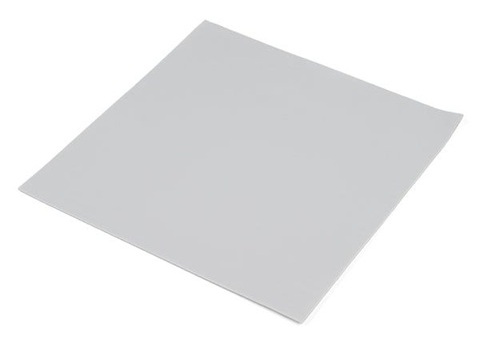
Sarthhak Resolve Global Pvt. Ltd. is a trusted Thermal Pad Manufacturers in Bangalore, Suppliers, Dealers and Exporters in Bangalore. We offer thermal interface materials designed to improve heat transfer, fill microscopic air gaps, and support efficient temperature management in electronic and industrial assemblies.
Our product range addresses diverse requirements involving thermal resistance, electrical insulation, material flexibility, and component protection. We support customized dimensions, thickness options, and application-specific material selection to meet evolving manufacturing standards.
We prioritize dependable product quality, practical engineering, and responsive supply solutions to help businesses improve equipment reliability, thermal stability, and operational efficiency across domestic and international markets.
Thermal Interface Pad Solutions Across Key KIADB Industrial Hubs in Bangalore
We provide dependable thermal pad solutions across major industrial areas in Bangalore, including Peenya Industrial Area, Bommasandra Industrial Area, Electronic City, Jigani Industrial Area, and Bidadi Industrial Area. Our thermal interface materials facilitate efficient heat transfer, electrical insulation, and temperature control in electronic and industrial assemblies. We serve diverse industrial applications with customized thicknesses, dimensions, and application-specific thermal pad solutions.
What Is a Thermal Pad and Why Is It Important?
A thermal pad is a soft, thermally conductive interface material placed between heat-generating components and heat-dissipating surfaces. It fills uneven gaps, reduces contact resistance, and transfers heat toward heat sinks, cooling plates, or metal enclosures.
Common materials include silicone elastomers, ceramic-filled polymers, and electrically insulating thermal compounds. Depending on the application, thermal pads can also provide vibration cushioning, electrical isolation, and consistent contact pressure.
How Does a Thermal Pad Work? Working Principle
Thermal pads operate by replacing insulating air pockets between two contacting surfaces with a material that conducts heat more effectively.
Surface Contact: The compliant pad conforms to component irregularities and fills microscopic gaps.
Heat Absorption: Heat moves from processors, power transistors, batteries, or other hot components into the interface material.
Thermal Transfer: Conductive fillers transport heat through the pad toward a heat sink or cooling plate.
Heat Dissipation: The receiving surface releases heat through convection, conduction, or an integrated liquid-cooling system.
Types of Thermal Pads for Advanced Cooling Applications
A well-known Thermal Pad Manufacturers in Bangalore, we are providing the best quality Thermal Pad such as:
Silicone Thermal Pad: Combines flexibility, conformability, and thermal conductivity for electronics, control units, and industrial equipment.
High Thermal Conductivity Gap Filler Pad: Bridges larger component clearances and supports compact assemblies with demanding heat-transfer requirements.
Conductive Thermal Pad: Uses conductive formulations for specialized electrical or thermal interfaces; electrical conductivity must be verified before selection.
Electrically Insulating Thermal Conductive Pad: Transfers heat while maintaining electrical isolation between power components and metallic surfaces.
EV Thermal Pad: Supports battery modules, power electronics, onboard chargers, and thermal interfaces in electric mobility systems.
Heat Sink Thermal Pad: Improves contact between processors, LEDs, power modules, and heat sinks without requiring conventional liquid thermal compounds.
Custom Thermal Pad: Offers application-specific thicknesses, die-cut shapes, dimensions, and material properties for automated assembly lines.
Technical Specifications
Specification
Description
Material
Silicone / Non-Silicone
Thermal Conductivity
1–12 W/mK
Thickness
0.5 mm to 10 mm
Hardness
Shore 00 / Shore A
Operating Temperature
-40°C to 200°C
Dielectric Strength
Application-dependent
Color
Blue, Grey, White, Pink
Adhesion Type
Single-Sided / Double-Sided
Electrical Property
Insulating / Conductive
What Are the Key Features of Modern Thermal Pads?
One of the leading Thermal Pad Suppliers in Bangalore, our all-types of Thermal Pad is included with new technological formulations such as:
Enhanced Thermal Conductivity: Ceramic and other suitable fillers improve heat-transfer performance in compact electronic assemblies.
Controlled Thermal Resistance: Optimized thickness and material composition support predictable heat flow across component interfaces.
Electrical Insulation Options: Dielectric formulations help protect sensitive circuits and high-voltage electronic assemblies.
Compression and Conformability: Flexible structures accommodate uneven surfaces, manufacturing tolerances, and vibration-related movement.
Advanced Material Stability: Suitable formulations resist ageing and maintain performance within their specified temperature ranges.
Precision Die-Cutting: Custom geometries improve component coverage and support repeatable placement in automated production.
Low-Outgassing Formulations: Application-specific materials can reduce volatile emissions in sensitive electronic and optical assemblies.
Applications of our Thermal Pad
Being the best Thermal Pad Dealers and Exporters in Bangalore, our all types of Thermal Pad are included with new feature and highly used in multiple applications such as:
Electric Vehicles and Battery Systems: EV Thermal Pad interfaces help transfer heat between battery components, cooling plates, and power electronics.
PCB and Semiconductor Assemblies: Thermal Pad for PCB applications helps manage heat around processors, integrated circuits, and power-management components.
Computers and Laptops: Thermal Pad for Laptop applications supports cooling across graphics processors, memory modules, and voltage-regulation components.
Mobile Electronics: Thermal Pad for Mobile devices can help distribute heat from compact processors and charging circuitry when suitable materials and thicknesses are selected.
Power Electronics: Thermal Pad for Mosfet applications transfers heat from switching components to heat sinks while providing electrical isolation when required.
Industrial Automation: Thermal Conductive Pad materials support temperature management in servo drives, PLC enclosures, power supplies, and control systems.
Advanced Cooling Assemblies: Thermal Pad for Heat Sink applications supports efficient thermal contact in LED lighting, telecom equipment, and high-performance computing hardware.
How Do Thermal Pads Support Current Industrial Market Trends?
Industrial requirement
Thermal pad contribution
Electric mobility growth
Supports thermal interfaces in battery packs, inverters, and EV charging electronics.
AI and data-centre computing
Helps transfer heat from high-power processors and accelerator modules to cooling hardware.
Miniaturized electronics
Accommodates restricted spaces and tight component clearances in compact devices.
Automated manufacturing
Die-cut formats and consistent thickness support repeatable assembly and inspection.
Renewable energy systems
Helps manage heat in solar inverters, battery storage units, and power-conversion equipment.
Thermal Pad Manufacturing Process and Material Selection
We select thermal pad materials according to required conductivity, compression, insulation, operating temperature, and application conditions.
Material Formulation: Silicone polymers or suitable alternative binders are combined with thermally conductive fillers such as alumina, boron nitride, or other application-compatible materials.
Mixing and Dispersion: Controlled blending promotes consistent filler distribution and reduces unwanted material irregularities.
Sheet Formation and Curing: The formulated compound is processed into sheets or moulded forms using appropriate production methods.
Precision Conversion: Pads are cut, punched, or die-cut to meet specified dimensions and component layouts.
Quality Inspection: Thickness, dimensions, appearance, and relevant thermal or electrical properties are checked against defined acceptance criteria.
The outcome is an application-specific thermal interface product intended to support dependable heat transfer, component protection, and repeatable assembly.
What Determines Thermal Pad Cost and Price?
Thermal Pad Price: Depends on conductivity grade, thickness, dimensions, and material formulation.
Thermal Pad Cost per Sheet: Varies with sheet size, usable area, material density, and manufacturing yield.
Custom Thermal Pad Price: May increase with complex die-cut profiles, tight tolerances, and low-volume production.
Bulk Thermal Pad Wholesale Price: Larger order quantities may reduce per-unit conversion and packaging costs.
Thermal Pad Supplier Price Comparison: Compare technical datasheets, minimum order quantities, testing documentation, delivery charges, and product suitability rather than choosing solely by the lowest quotation.
Why Choose Us?
Application-Focused Product Selection: We help identify suitable thermal interface materials according to component geometry and operating conditions.
Customization Support: We accommodate specified thicknesses, shapes, and dimensions according to product feasibility.
Quality-Oriented Manufacturing: We emphasize dimensional consistency, material traceability, and appropriate inspection procedures.
Supply and Export Support: We aim to provide dependable communication, practical order coordination, and packaging suitable for domestic and international shipments.
Sarthhak Resolve Global Pvt. Ltd.. is a trusted Thermal Pad Manufacturers in Bangalore, Suppliers, Dealers and Exporters in Bangalore with application-oriented thermal interface solutions. Our product options address heat transfer, gap filling, electrical insulation, and customized component integration across modern electronics and industrial equipment.
By emphasizing appropriate material selection, manufacturing consistency, and verifiable quality checks, we aim to help businesses improve thermal management and equipment reliability. Selecting the correct thermal pad according to conductivity, thickness, compression, and operating conditions remains essential for achieving dependable long-term performance. Contact Us today for more information!
Frequently Asked Questions (FAQs)
The best thermal pad depends on the required thermal conductivity, component clearance, electrical insulation, and operating temperature.
Yes, custom thermal pads can be produced in application-specific thicknesses, shapes, and dimensions according to manufacturing capabilities.
Suitable thermal interface pads can support heat transfer between battery components and cooling systems when designed for the required operating conditions.
Choose a thickness that fills the measured interface gap while meeting the specified compression and thermal resistance requirements.
Thermal conductivity, material type, thickness, dimensions, customization, order quantity, and testing requirements influence the final price.